The villagers’ pursuit of the unmarried mother
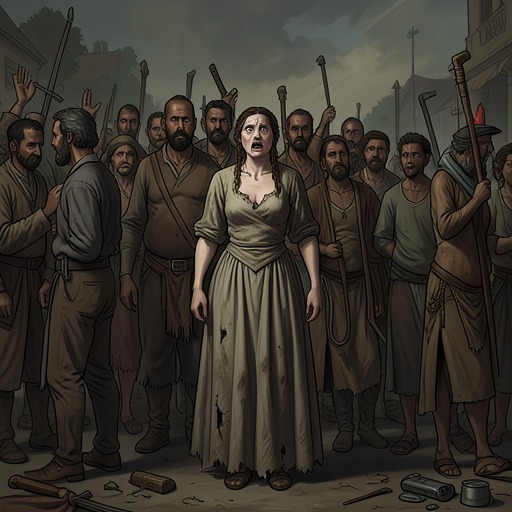
The House of Bernarda AlbaThe villagers’ pursuit of the unmarried mother is a brief but consequential episode in The House of Bernarda Alba: after a young unmarried woman gives birth and kills her child, villagers drag her through the street and threaten her with death. The scene turns the village’s sexual honour code into collective violence and throws Bernarda’s harsh approval of punishment against Adela’s plea to spare the woman.
Causes and Background
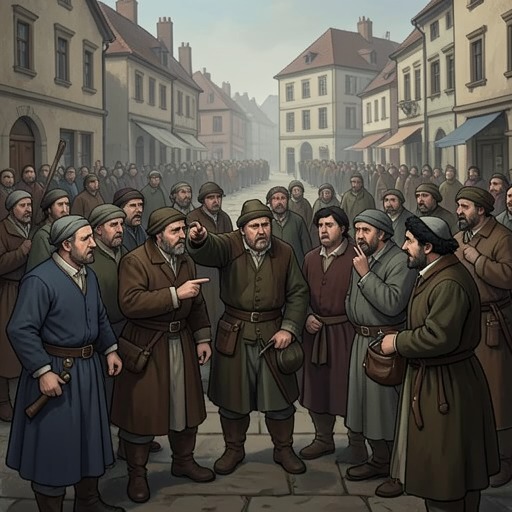
The Servant brings news of a disturbance outside while Bernarda and her household are already strained by suspicion and conflict. Poncia explains that Librada’s unmarried daughter had a child whose father is unknown, killed the infant to hide the birth, and buried it beneath stones. Dogs uncover the body and leave it at the woman’s doorstep; the discovery brings the matter into public view and prompts the villagers’ pursuit.
The episode draws on the play’s depiction of village life, where illegitimacy, gossip, and public judgment carry serious consequences. The pursuit is not presented as a formal legal proceeding: it is the villagers’ own punishment, driven by a social code that treats a woman’s sexual conduct as a matter of communal honour. The commentary connects that code to a wider gendered double standard: Bernarda condemns women’s sexual transgression while accepting men’s sexual freedom.
The Pursuit and the Household’s Response
The unmarried woman is dragged down the street as men run in from the paths and olive groves. Inside the house, the news makes the distant crowd present to the women, and their responses divide sharply. Bernarda urges the villagers to kill the woman and welcomes their arrival armed with olive switches and pick-handles. Adela cries out against the killing. Martirio, by contrast, says they should go out too, placing her with those ready to join the crowd rather than with Adela’s protest.
Adela’s physical response reinforces the force of the moment: when the disturbance is reported, she clutches her stomach. The play offers no further explanation for this gesture, but places it beside the news of the woman’s pregnancy, birth, and death of her child. The pursuit therefore resonates within the household as more than a village spectacle, without making Adela’s gesture proof of any particular circumstance.
Honour, Punishment, and Dramatic Significance
Bernarda’s response extends her authority beyond the walls of her home. She has enforced mourning, domestic restriction, and concern for family reputation within the household; here, she endorses the same punitive logic when the target is a woman outside it. The episode makes visible the violence behind the village’s distinction between respectable women and women branded as dishonourable. It also shows how public outrage can turn sexual shame into an immediate threat of collective punishment.
The scene’s significance continues into the ending. After Adela’s death, Bernarda orders the household to present her as having died a virgin and insists that no one speak of the truth. That concealment echoes the village’s policing of women’s sexual reputations, though the pursuit and the household cover-up are different acts: one is a crowd’s threatened violence against an unmarried mother, the other Bernarda’s effort to protect her family’s name. Set alongside Adela’s protest, the episode exposes the cost of a social order in which reputation can matter more than a woman’s life.